
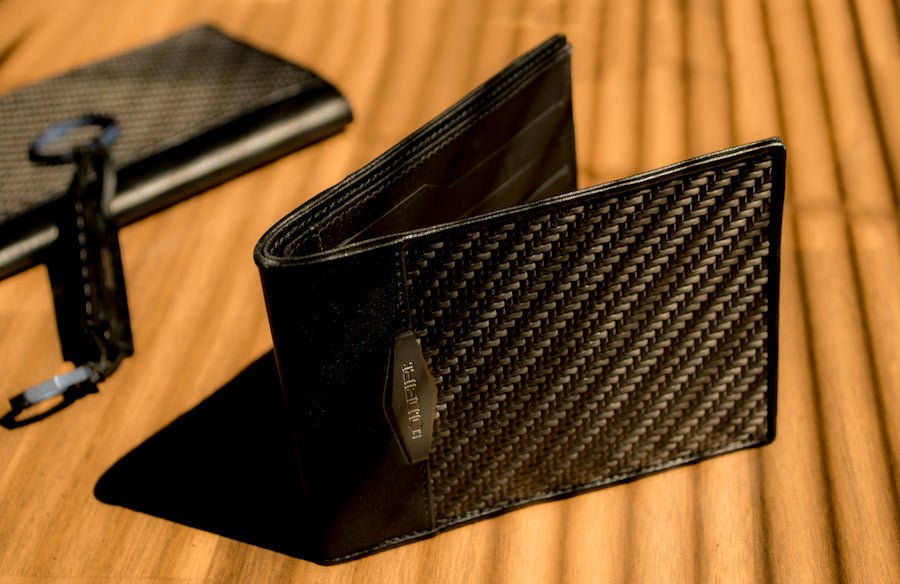
Updated June 2026. We make both leather and carbon fiber wallets in our own facility in Plovdiv, Bulgaria, so this comparison comes from the workbench, not from theory.
Leather wallet or carbon fiber wallet? It is the most common question we get, and the honest answer depends on how you carry. Below is the full breakdown: durability, weight, slimness, RFID protection, aging and feel, plus a clear recommendation for each type of carry.
The short answer
If you want the thinnest, lightest, most durable wallet that holds its shape permanently, carbon fiber wins. If you want warmth, patina and a classic look, full-grain leather wins. And if you refuse to choose, the strongest option is a hybrid: flexible carbon fiber structure with a performance leather exterior, which is exactly how we build the GT Rebel collection.
Leather vs carbon fiber at a glance
| Carbon fiber | Full-grain leather | |
|---|---|---|
| Durability | Highest tensile strength on the market, no stretch, no deformation | Very durable when full-grain, but stretches and softens over years |
| Weight | Exceptionally light (our Scout One weighs 25g) | Light to moderate, depends on the hide |
| Slim profile | Holds its closed thickness permanently (from 5mm) | Thickens and relaxes as the leather breaks in |
| RFID protection | Not automatic, added as a shielding layer | Not automatic, added as a shielding layer |
| Aging | Looks the same on year ten as on day one | Develops patina, character grows with use |
| Feel | Technical, modern weave texture | Warm, soft, classic |
| Faking it | Nearly impossible to replicate convincingly | Easy to fake with bonded and split-grain substitutes |
Durability: carbon fiber takes it

Our wallets use Carbitex Omniflex (CX6) flexible carbon fiber: it is roughly 10 times stronger and 5 times lighter than steel, flexes without fatigue and resists abrasion. A carbon fiber wallet does not stretch around your cards, which is the quiet failure mode of most leather wallets: after a year the card slots loosen, the profile swells, and the wallet never looks crisp again.
That said, not all leather deserves the bad reputation. Kangaroo leather (K-Leather) is the strongest and lightest leather per gram available, with densely packed parallel fibers that hold structure under daily card pressure. It is the same performance hide used in professional cycling gloves and boxing equipment, and it is why we use it instead of cowhide. If you want pure leather done properly, see the Snake Eye collection.
Weight and slimness: real numbers
Claims are cheap, so here are measured numbers from our current lineup:
- Flex One - 46g, 5.5mm closed. Vertical carbon fiber bifold for front pocket carry.
- Strike Core - 55g, 6mm closed, 6 card slots. The benchmark full-size carbon fiber bifold.
- Scout One - 25g, 5mm. The minimal sleeve.
A comparable full-size leather bifold typically starts around 80 to 100g and grows thicker with use. With carbon fiber, the thickness you buy is the thickness you keep. Compare all four Strike configurations in the Strike Series.
Aesthetics and aging: leather takes it (if you like patina)

This is the one category where the answer is genuinely personal. Full-grain leather develops patina: it darkens, softens and records your use. Many men love that. Carbon fiber is the opposite: the woven texture looks identical on year ten as on day one. If consistency is the point, carbon wins; if character is the point, leather wins.
One aesthetic advantage carbon fiber holds outright: it is nearly impossible to fake convincingly, while leather is the most counterfeited material in accessories. When you buy real carbon fiber, you know exactly what you are getting.
RFID protection: a draw (it depends on the build)
Neither material blocks RFID by itself. Protection comes from a dedicated shielding layer, and that is a build decision, not a material property. Every COLDFIRE wallet, leather or carbon, integrates RFID Data Armor: cryptalloy foil shielding that blocks 13.56 MHz RFID and NFC skimming. Whichever side of this comparison you land on, do not buy a wallet without it: contactless pickpocketing requires nothing more than someone walking past your pocket.
The hybrid answer: why choose at all

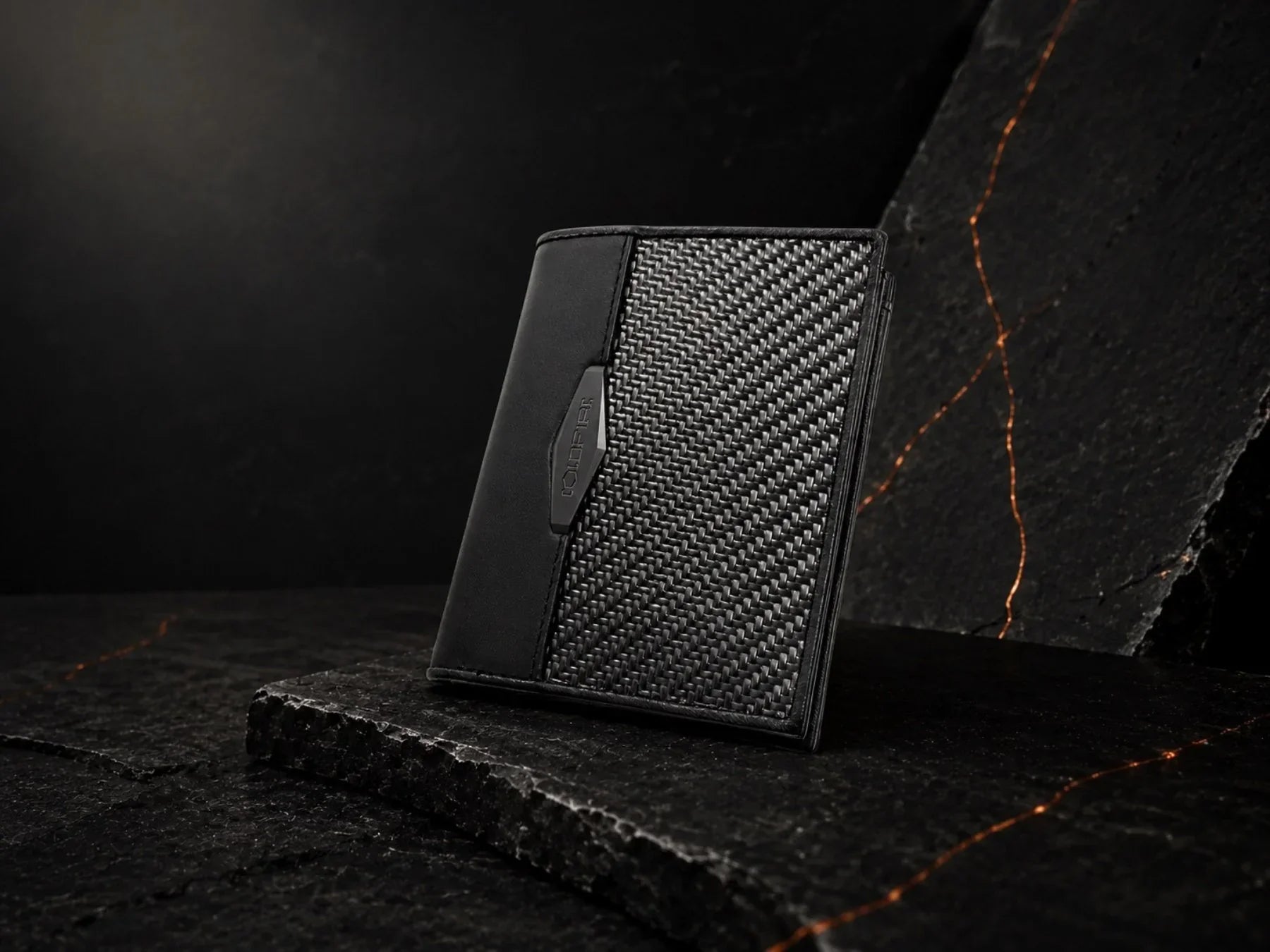
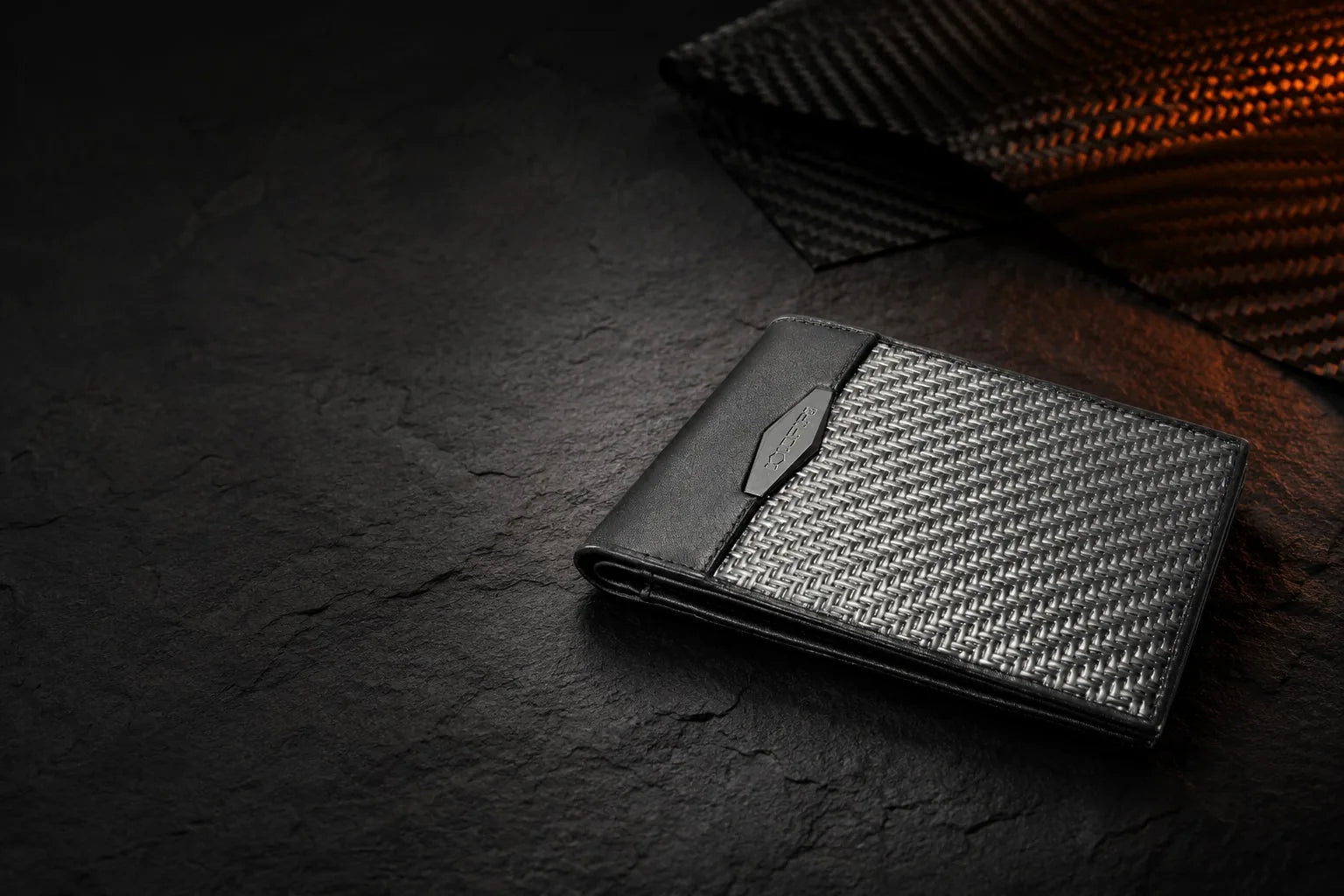
The reason this debate never ends is that both sides are right. So we stopped choosing: GT Rebel wallets combine a Carbitex Omniflex carbon fiber structure with a K-Leather exterior, Ti-6Al-4V titanium hardware and RFID Data Armor. The carbon keeps the wallet permanently slim and structured; the kangaroo leather gives it the softness and warmth leather lovers refuse to give up. You can read exactly how the materials work together on our materials page.
What about "carbon leather"?
If you shop around, you will meet the term "carbon leather" or "carbon fiber leather". Despite the name, it is not carbon fiber and often not even leather: usually it is a synthetic material such as PVC embossed with a carbon-style pattern, sometimes a coated leather base. It copies the look at a lower price, but none of the strength, weight or durability of woven carbon fiber. Visually striking, mechanically ordinary. If the listing does not name the actual carbon material (ours is Carbitex Omniflex), assume it is a print.
Which one is right for you?
- You want maximum slimness and zero maintenance - carbon fiber. Start with the Strike Core for full-size carry or the Flex Series for the front pocket.
- You want classic leather, done at performance grade - K-Leather. The Snake Eye collection is pure kangaroo leather with no carbon at all.
- You want both - the hybrid GT Rebel collection: carbon structure, leather skin.
Whichever you choose, every COLDFIRE wallet is handcrafted in Plovdiv, Bulgaria with RFID Data Armor and a 2-year warranty.
Going deeper? See the model-by-model numbers in our Best Slim Wallets for Men 2026 guide, or compare carbon against metal in Carbon Fiber vs Aluminum Wallets.
Frequently asked questions
Is carbon fiber more durable than leather?
Yes. Woven carbon fiber has the highest tensile strength of any wallet material, does not stretch and does not deform. High-grade full-grain leather is durable too, but it softens and relaxes with years of use.
Are carbon fiber wallets worth it?
If you carry every day and care about a permanently slim profile, yes: a carbon fiber wallet keeps its shape for the life of the product, so the cost per year of use is typically lower than replacing stretched leather wallets.
Do carbon fiber wallets block RFID?
Not by themselves. RFID protection comes from a dedicated shielding layer. Every COLDFIRE wallet includes RFID Data Armor that blocks 13.56 MHz RFID and NFC regardless of the exterior material.
How long does a leather wallet last?
A cheap bonded-leather wallet often fails within a year or two. A full-grain or K-Leather wallet lasts many years, though it will soften and develop patina. A carbon fiber or hybrid wallet holds its original shape the longest.
Share:
How to Travel to a Dangerous Destination
The Best Mens Wallets: Carbon Fiber Wallets and Why?